
Wishing everyone a very Happy Holiday Season and a Wonderful New Year.
Winter Scene Photographs


 We went canoeing along the Potomac last week. After putting in to the re-watered C&O Canal at the Pennyfield Lock a few miles west of tony town of Potomac Maryland, we paddled for a couple of miles up the shady canal to Violettes Lock. It was a beautiful day in the low 80's and we spotted blue herons, turtle, and a bold little green heron. Once at Violettes, we ported the canoe up and over to the Potomac river itself to complete one of the few places you can do a canoe loop trail.
 The most memorable part of the trip were the river grasses, both in the canal and on the river. I'm used to canoeing on the Patuxent which today is a turbid and choked with sediment. The water on this stretch of the Potomac was clear and the river grasses had recovered magnificently. Near Violettes Lock there were a few patches heavy in hydrilla but mostly we saw vast underwater meadows of water stargrass. These dense clusters of meter-long braids of grass were topped with delightful little yellow flowers floating just on top of the water. Amongst the grasses, we spied all varieties of fish including bass, catfish, and blue gills. The water clarity was excellent; it made me think of bringing my snorkel gear.
 Since hydrilla is not native to the Chesapeake I was alarmed and upset that the mass of vegetation was blocking my navigation to the inner reaches of the marsh. However my reading now indicate that this may not be such a bad thing. It seems that hydrilla on the Potomac was a pathfinder plant for the river's recovery. This hardy weed was the first plant to establish itself as the water quality began to improve. Once in place, this fast growing plant helped to further filter the river, both physically and chemically. The hyrdrilla has also proved a useful food source for wintering waterfowl. Other native sub-aquatic vegetation, like the fields of stargrass we observed, soon followed the hydrilla.
 Content
 Farthest south on the Prince George’s side of the river, the Merkle Wildlife Sanctuary was founded in the first half of the 20th century by Edgar Merkle to protect the then threatened Canadian Goose. Run today by the Maryland Department of Natural Resources, the park offers a visitor center, hiking trails, observation towers, and driving tour.
 A few miles farther north is the Mount Calvert Historical & Archaeological Park, one of the most significant historical and archaeological sites in Prince George's County. Located on a picturesque rise at the confluence Western Branch and the Patuxent that has over the centuries been home to Native American villages, the first county seat and port of entry for colonial Prince George’s county, and now the18th century manor house of an antebellum plantation. Surrounded by active archaeological digs, the house is now home to museum chronicling the 10,000 year history of the site.
 only. The mission of the Sanctuary is supported by hundreds of volunteers who participate in scientific studies, lead nature hikes and canoe trips, act as docents at the visitor center, and support the general maintenance of the sanctuary.
 In the early spring, the first plants begin to emerge from the open waters of Jug Bay. By June, the wetlands are transformed into a field brimming with broad leafed spatterdock, hydrodynamically shaped arrow arum and arrowhead, and tall cattails and wild rice. Visiting you will see flocks of red-winded blackbirds forage through the tall reeds while majestic blue herons stalk small fish along the water’s edge. The marsh is dotted with osprey nests where each year faithful pairs return to raise their young. Hidden amongst the many small channels are beaver lodges and very illusive wood ducks. The freshwater marsh is also a nursery for fish and hosts a wide variety including killifish, mummichogs, shiners, sunfish, catfish, perch, and rockfish.
 Jug Bay is an important stop over for birds heading south on the fall migration. The rich wetlands provide an important rest stop for a wide variety of migrating birds that feed on the wild rice, berries, sub-aquatic vegetation, and fish of the area. Over 30 species of waterfowl spend the winter around the Jug Bay area including Canadian Geese, Tundra Swans, Mallards , Black Ducks, Green-Winged Teals, Long-Tailed Ducks, Buffleheads and Goldeneyes.
 Had the opportunity to spend a long weekend at Chincoteague. Got up at dawn the first day to a perfectly still morning on the Back Bay. The old drawbridge mirrored on the calm waters of Chincoteague Channel. Laughing Gulls started their patrols while mallards - and all sorts of mallard hybrids - filtered out of the marsh to forage amongst the piers. A lone fishing boat, the Toots was tied up on the docks.
 Wildlife Refuge. Its was another beautiful morning. Temperatures were in the sixties and the early morning fog was just burning off. It was low tide in the Swan's Cove Pool just behind the beach and the waters were teeming with wading birds - various egrets, ibises, and yellowlegs. Fish were especially concentrated in the deeper channels and laughing gulls, common and forster terns were swooping down feasting. Later, I spotted a flock of black skimmers on the mud flats. On the way out, I stopped at the woodland trail and spotted an endangered Delmarva Fox Squirrel.
 Of course, we also had a great sunset. Watched the mallards retire back into the marsh. Large families, some with tiny ducklings, some with almost fully grown ones, followed their mamas back across channel. Then just as the sun set a pod of dolphins cruised under the old bridge and down the channel. Fifteen to twenty of the sleek creatures porpoised past the hotel into the back bay, an unexpected thrill to end the day.
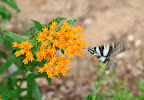 Attended a presentation at an area garden center - Homesteads Gardens - this past Sunday. Steve Castorani of North Creek Nurseries was giving a free presentation on 'Using Natives in your Garden Landscape'. It was an informative mini-lecture on the benefits and relative ease of putting native plants into the your home's yard and garden. The benefits highlighted included not only the creation of food and habitat for local wildlife but also need less maintenance, less water, and increase the aesthetic and often monetary value of your property.
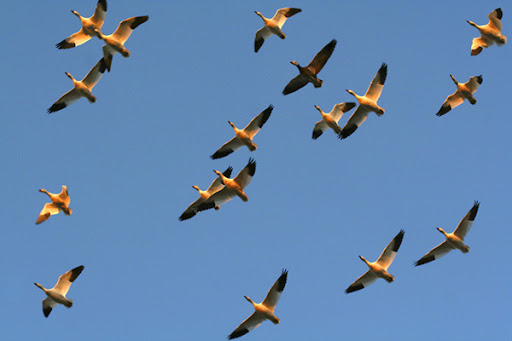 I've been working on list of 10 Things You Can Do to Help the Chesapeake. Its a work in progress full of ideas on how to help the ecosystem with links to references and detailed information on steps to take. Click here for the full list.


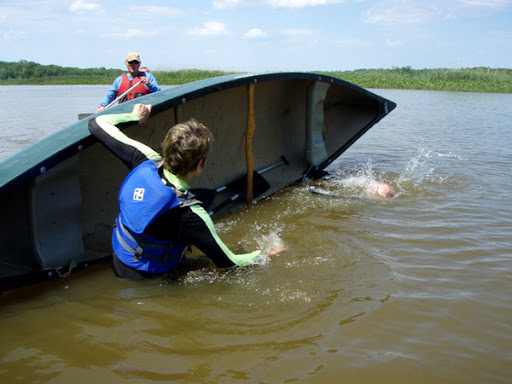 Had a memorable time this Saturday attending Canoe and Rescue training at the Jug Bay Wetlands Sanctuary on the Patuxent. I volunteer at the Sanctuary as a canoe guide and the training was a great opportunity to hone old skills and learn new ones. Frank Marsden, a Certified Instructor with the American Canoe Association, led the class. Bringing his 20 years of experience, Mr. Marsden taught the assembled volunteers methods to improve paddling techniques, safety protocols, and guiding tips.
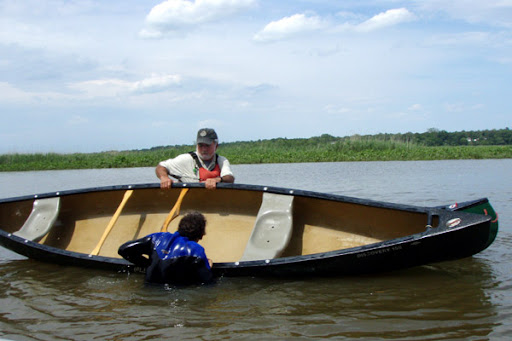 We took turns dumping ourselves into the river and then being rescued by the other guides. While a rare occurrence – I’ve only seen one canoe capsize in a dozen years of leading trips at Jug Bay – the lessons were an excellent refresher. And even with the cold early season water temperatures, everyone enthusiastically participated.
 It's raining again today. It has been a wet week in Maryland; we had half a foot of rain over the previous weekend that caused lots of flooding. With so much land paved over for roads and parking lots, the rain has no were to go and with 6 inches of rain, the storm ponds built around the housing developments and strip malls were simply overwhelmed. As I was driving on Monday I saw the county Swift Water Rescue Team race down the highway, as I was to learn later, to save a man whose pickup truck had gotten washed away driving down a flooded roadway. I myself drove past several areas on the local backroads were streams that are normally tiny brooks were up and onto the roads.
 For Earth Day, I went to the Chesapeake Bay Foundation's Oyster Restoration Center in Shady Side, Maryland, on the West River. There I spent the morning with about 4 dozen volunteers - adults and children - building artificial reef balls to help restore the oysters in the Chesapeake.
 cleaned, rebuilt, and filled with a fresh load of cement. Fortunately we had great weather, not too hot, and the entire crew pulled their weight to finish this job, and a few others by lunch.


